071 - WallStreetBooyah: Fintwit on Twitch with John Andrews - Video
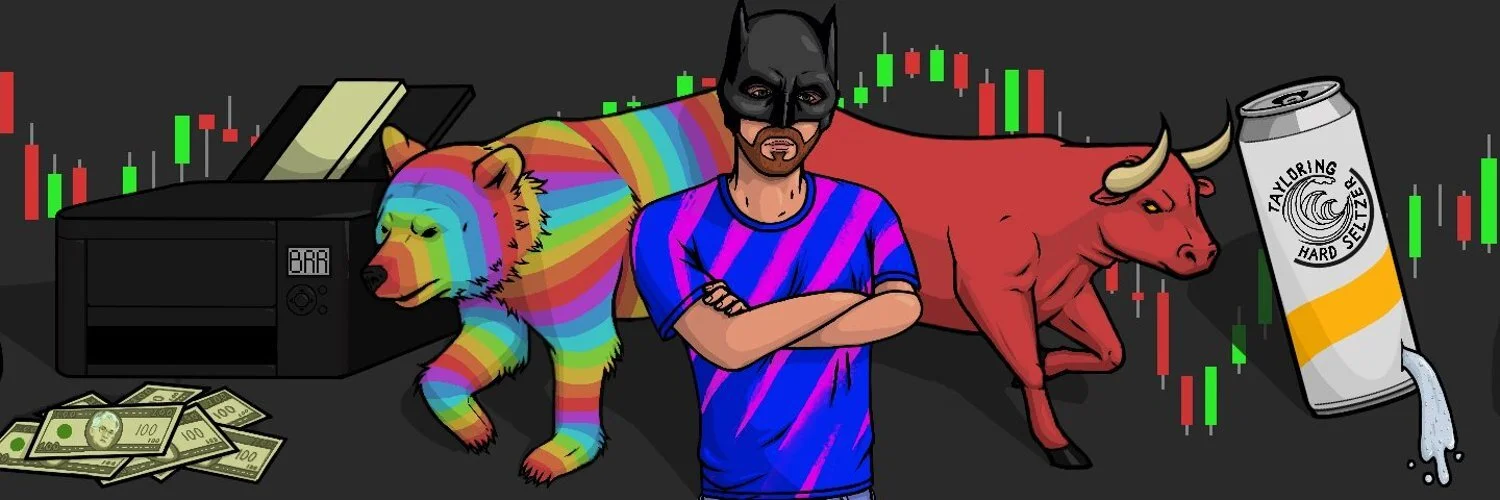
John and Emily bring WallStreetBooyah into the conversation in this episode. They discuss the authenticity and democratization of media and how creating unique content on a unique platform can lead to more diverse marketing opportunities. Be sure to watch the video and meet the anonymous man in the mask, WallStreetBooyah.
"They're missing the entire next generation of investors, and they're just making fun of them, all the Robinhood millennials, and they just joke about it and move on. But their entire audience is retiring soon. And they're going to be withdrawing all of their stocks into fixed assets. And who is going to watch them? The Robinhood millennials." - WallStreetBooyah
There's a daily R-rated party of smart business and market commentary on WallStreetBooyah's Twitch channel. The anonymous man in the bat mask is inventing a new category, quickly gaining over 6,000 active followers in months. Get up to speed on the evolution of financial news in Emily’s conversation with Booyah and digital marketing expert John Andrews. (ICYMI: catch episode 70 with John and Emily discussing marketing and retail during COVID-19).
This conversation covers the so-called Robinhood millennial investor, live streaming and online community, and influencer marketing. Be sure to watch the video and meet the anonymous man in the mask, WallStreetBooyah!
WATCH THE VIDEO:
Guests:
WallStreetBooyah: "ScruffBat. Millennial. Idiot. Twitch person. Equal parts Cramer/Rogan/Pokimane. Fighting JPow & money printer w/ music and memes. Not financial advice." - @WSBooyah on Twitter
John Andrews, CEO of Photofy, a community content creation platform, is a media disruptor. Leveraging over twenty years of experience in consumer packaged goods marketing coupled with eight years of social media knowledge to build new media formats in the shopper marketing space. He helped build one of the first ‘people as media’ platforms at Walmart called Elevenmoms, founded Collective Bias (Acquired by Inmar in 2016), and teaches as an adjunct professor at NC State University.
1-click play this episode anywhere
Theme: Authenticity and democratization of media. Creating unique content on a new platform can be a category killer. Imagine the future of podcasting with this in mind.
TOPICS:
01:30: Who is WallStreetBooyah? What does he do? How did we hear about him?
03:01: What can you expect to hear on WallStreetBooyah's Twitch channel? "This is something new." - John Andrews
Anonymous Twitch financial commentator WallStreetBooyah wears a bat mask on his R-rated financial news channel that embraces the Robinhood investor and holds back nothing.
05:00: Category killing and financial news: Twitch isn't somewhere you would think to go for financial information. WallStreetBooyah is using an unconventional channel to reach an audience, essentially inventing a new category with less competition.
06:20: "I bill myself as the absolute worst financial show you're ever going to see. I don't have any training in finance or business. I don't have any degrees." - WallStreetBooyah
WallStreetBooyah has over 6,000 Twitch followers
WallStreetBooyah's show is built on quick witted commentary that’s a collaboration between him and his audience (in the live chat). He embraces the Robinhood trading persona. The interaction and the community draw out unique content that serves as the real entertainment and hook to the audience, which is what draws John Andrews in almost everyday.
"It's a conversation... If there is a car chase in the middle of the day, we'll pull it up and watch that." - WallStreetBooyah on the content style for his show
08:08: Jack Dorsey has promised that Twitter will never have an “edit" button - and that’s good (Emily)
09:30: The gambler mentality of day trading (poker, puts, betting)
"That's the audience; we're interested in the stock market, we're interested in trading. A lot of us have gambling in our systems to be perfectly honest, playing poker and learning odds, and those types of mathematics." - WallStreetBooyah
13:05: What hooked John Andrews on Booyah’s Twitch?
"It gives me a sense of people's mindset, which I think is a lot of the market anyways, right? A lot of the market is people's emotions, what are people thinking and doing." - John Andrews
15:09: A differentiator: interactive storytelling replaces push messaging and one-way content. People don't want to be sold to anymore, and consumer trust is at an all-time low. Audiences don't trust traditional news sources as much and prefer to choose their own news entertainment that reflects a voice. Think: media democracy.
15:52: How can conversations on WallStreetBooyah's Twitch channel inspire your own marketing?
18:35: Dave Portnoy, controversial figure in fintwit, founder of Barstool Sports - growing your marketing/media exposure with video and social media
21:30: What does Booyah think is the problem with traditional financial news sources like CNBC and Bloomberg?
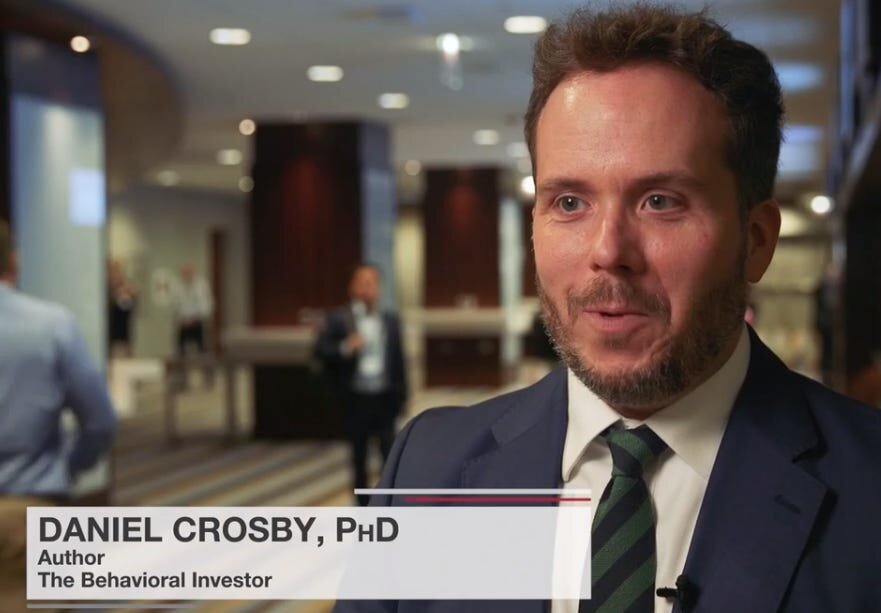
25:02: Daniel Crosby, NYT best selling author of The Behavioral Investor, psychologist, and behavioral finance expert:
Hear our episode with Daniel Crosby
INSTA - FOLLOW @BEETLEMOMENT:
068 - Perth Tolle: Free People, Strong Markets (VIDEO)
Hear why freedom weighting is a powerful way to invest internationally, rewarding countries with greater freedom for their citizens. Find out how Perth Tolle has quantified freedom for international investing with her ETF: Life + Liberty Indexes.
Guest: Perth Tolle is the founder of Life + Liberty Indexes, an index company that uses human and economic freedom metrics as the primary factor in its investment process. Prior to Life + Liberty Indexes, she was an advisor at Fidelity Investments in California and Texas.
Play the video:
Find out why freedom weighting is a powerful way to invest, and how Perth Tolle has quantified freedom for the purposes of international investing with her ETF. This fund was created for investors want a broad emerging markets allocation but don't want to support the worst human rights offenders like China, Egypt, Saudi Arabia, and Russia, etc.
Countries are scored by think tanks including the CATO Institute on three measures:
Rights to Life
Rights to Liberty
Rights to Property
1-click play this podcast anywhere:
Perth Tolle, founder of Life + Liberty Indexes, talks about the relationships between human rights and economic freedoms and a country’s market strength. And yes we discussed China.
Guest: Perth Tolle is the founder of Life + Liberty Indexes, an index company that uses human and economic freedom metrics as the primary factor in its investment process.
What effect do greater citizen liberty and economic freedom have on a country's stock market? We’re giving you the breakdown on how Life + Liberty calculates their index. Hear how freedom weighted investing can be a beacon of positivity during tough times.
Disclaimer: This is not a recommendation to buy or sell securities. This episode does not contain any financial recommendations or advice.
Topics and Timestamps
01:43: Life + Liberty Indexes and the mission with the FRDM Index
“We started this company so that people who have an interest in freedom and the benefits of freedom as a foundation for economic growth and societal growth over time can have a way to invest according to those values.” - Perth Tolle
02:30: Index investing: What is it?
03:15: How cultural backgrounds and governments can impact investing habits
05:00: Where does the data come from for the index, and how is it broken down? Think tanks who provide the scoring data include: Cato Institute, Fraser Institute, and the Friedrich Naumann Foundation.
“I break down those metrics into three categories. The rights to life, the rights to liberty, and the rights to property.” - Perth Tolle
07:15: Incorporating economic freedom factors into strategy: “We’re for freedom.”
08:00: The dichotomy of freedoms: How do economic freedoms and human freedoms relate?
“People are the driving force behind an economy in any society. And so if your people are not free to innovate, be creative, and to not live in fear of censorship, arrest, disappearances, or worse, then you’re not going to have as much innovation as you potentially could.” - Perth Tolle
11:20: The Lion King and power dynamics
“You’re either marching towards freedom or away from it.” -Perth
14:00: How does Perth determine which countries are scalable enough to include in the FRDM index?
15:00: Shout out to our friends at Ritholtz Wealth Management, especially to Josh Brown (@reformedbroker) for putting Perth on Emily’s radar. The Ritholtz Mafia puts out some of the best content in finance, from books to blogs to podcasts to their top ranked Alexa Flash Briefing, Market Moment, which we launched.
Recommended reading from Perth’s stack: check out Michael Batnick’s book, Big Mistakes: The Best Investors and Their Worst Investments:
15:40: Building connections and advisory boards - the Fund Board, AKA the Fun Board
19:30: How earned media can help you grow your business. Networking, as always, can help you thrive in the beginning.
22:40: Shining the light on progress: Your investing decisions can be considered charitable in some cases.
23:45: Big stacks of books and recommendations to get you through quarantine.
Books and Podcasts Perth recommends:
Pod: any of Bill Browder’s his many appearances on the podcast Stay Tuned with Preet - e.g. The Death of Sergei Magnitsky (with Bill Browder)
Patrick O'Shaughnessy’s podcast Invest like the Best, episode: Investing During a Crisis with guest Dan Rasmussen of Verdad Capital
Follow @beetlemoment on Instagram:
061 - Dr. Daniel Crosby: Boating and Selfies Are Dangerous, Investing Is Not
Do you know the biggest misconception about investing? New York Times best selling author Dr. Daniel Crosby joined Emily Binder to talk about the psychology of money. Many investors are mistaken that success in the markets is about being analytically minded, but it’s actually more about self control.
So yes, C.R.E.A.M., but emotion rules cash. Daniel shares the three legs of effective investing and why education alone isn’t enough to save us from investing mistakes or weight gain. (Yes, the two are linked.)
1-click play this episode wherever you listen
Guest: Dr. Daniel Crosby is an Atlanta based psychologist and behavioral finance expert who helps organizations understand the intersection of mind and markets. A New York Times bestselling author, his most recent book is The Behavioral Investor. Dr. Crosby is Chief Behavioral Officer at Brinker Capital.
Timestamps and topics:
02:00 Daniel’s background: trained in clinical psychology then searched for non-clinical applications of psychology, stumbled on behavioral finance: the intersection of the mind and the markets
02:50 What do people most misunderstand about investing and their money?
03:20 “My business is full of human behavior” -Daniel’s father, a financial advisor for forty years
4:00 Many people think that success in the markets is about being analytically minded… when in reality the most successful investors have one thing in common: being able to control their own emotions. See Buffett.
4:15 It’s quite easy to be okay or good at investing
04:40 Cognitive errors
05:00 Our brain is wired to keep us alive long enough to pass on our genes, not to achieve excellence
05:25 The ways our brains betray us and hurt our investing: Our ego (especially a problem for men: see Consider Firing Your Male Broker by Blair duQuesnay), emotion, conservatism, and attention (tendency to confuse what’s easy to recall vs. what is probable)
Taking selfies is riskier than investing.
06:20 Example of attention leading us astray: People are very afraid of sharks but not of taking selfies, even though the latter has a higher death rate. Attentional bias for the vivid.
07:13 People think investing is risky even though over any given fifteen year period in history you couldn’t have lost money while invested in the general stock market
07:30 Multi-asset class diversified investing is much safer than, for example, taking selfies or boating, but we don’t perceive it this way
Boating is riskier than investing.
08:20 We tend not to answer the complicated question but to substitute: so we ask, “is this enjoyable?” And investing isn’t fun, but boating is fun. So instead of answering “is this risky?” we answer the question “is this enjoyable?” And then boating seems safer than investing.
10:25 It’s more complicated than just having an advisor help you.
The three legs of good investment decision making:
Education: learn about stocks, bonds, accounts
Environment: your portfolio - well-diversified that won’t scare you to death
Encouragement: good advisors to slap the bad decision out of your hand before you make it
11:00 Self-control parallels to diet and exercise: know what to eat, don’t have junk in the pantry, have a trainer or workout buddy to get you in the gym (apply these analogies to investing)
11:20 We added nutrimental information and calorie labels to food but we are actually twice as obese now - behavior change takes much more than just education
12:00 We want to think that we’re rational but information/education is a weak predictor of behavior change (nutrition labels alone don’t change our behavior)
13:25 For the same reasons that we’re fat, we’re poor. It’s complicated information, and it’s just information alone, which is ineffective (see the three legs). There’s a cottage industry of selling complexity.
Our tweet storm - what do people misunderstand about investing?:
14:00 Are people more empowered to manage their money now with technology and more transparency? Are we on a better path to managing our money better now that we’ve gotten away from old school stock brokers dialing for dollars and manipulating our emotions?
15:00 There’s never been a better time to be an individual investor, yet things we think we want like transparency and liquidity can hurt us. E.g. the more you check your account, the more it induces action, panic, and mistakes.
You’ve probably heard of the famous Fidelity study which showed that investors who had forgotten their account passwords performed better than ones who logged in and traded actively.
16:00 Across 19 different countries, the more active people are with trading, the worse their portfolios tend to perform.
17:15 People need financial advisors, but not for the reason they think.
18:00 Emily mentioned this quote from Stephanie Bogan on Patrick Brewer’s podcast, The Model FA: “When people come into your office to talk about their money, they’re never really talking about their money."
19:00 Literally nothing has more excitatory power in the brain than money - not sex, not death, not anything else.
19:40 Daniel has a strong Twitter presence, is great at marketing himself, and at making his ideas accessible: what is his strategy?
20:35 Daniel’s long term plan: put positive messages into the world and study happiness
21:30 Daniel’s podcast recommendations:
Dateline NBC Podcast - listen on Spotify
Ologies Podcast - study of different sciences
The Pitch (“Shark Tank" for your ears”)
Standard Deviations (Daniel’s podcast) - Emily’s favorite episodes:
24:00 Daniel’s book recommendations:
He is writing a book on the meaning of life, so he is reading about this. Best one he read last year: Alchemy by Rory Sutherland (Ogilvy guy) - great book for anyone into marketing. Topic: behavioral economics and applying psychology to marketing.
Connect with Daniel Crosby:
Twitter: @danielcrosby
Interested in business, marketing, and technology? Subscribe free to our minipod, Voice Marketing with Emily Binder. Under 5 minutes twice a week on podcast apps and Alexa: