podcast Emily Binder podcast Emily Binder

075 - Kate Bradley Chernis: When You Have No Off Button (VIDEO)

Why do we often put up a front in our business lives to disguise our real selves? In this episode, Emily and Kate Bradley Chernis, Co-Founder and CEO of Lately, are breaking down that front for a refreshing take on being yourself in the business world. Plus, tips on navigating the psychological impacts of pandemic PTSD.
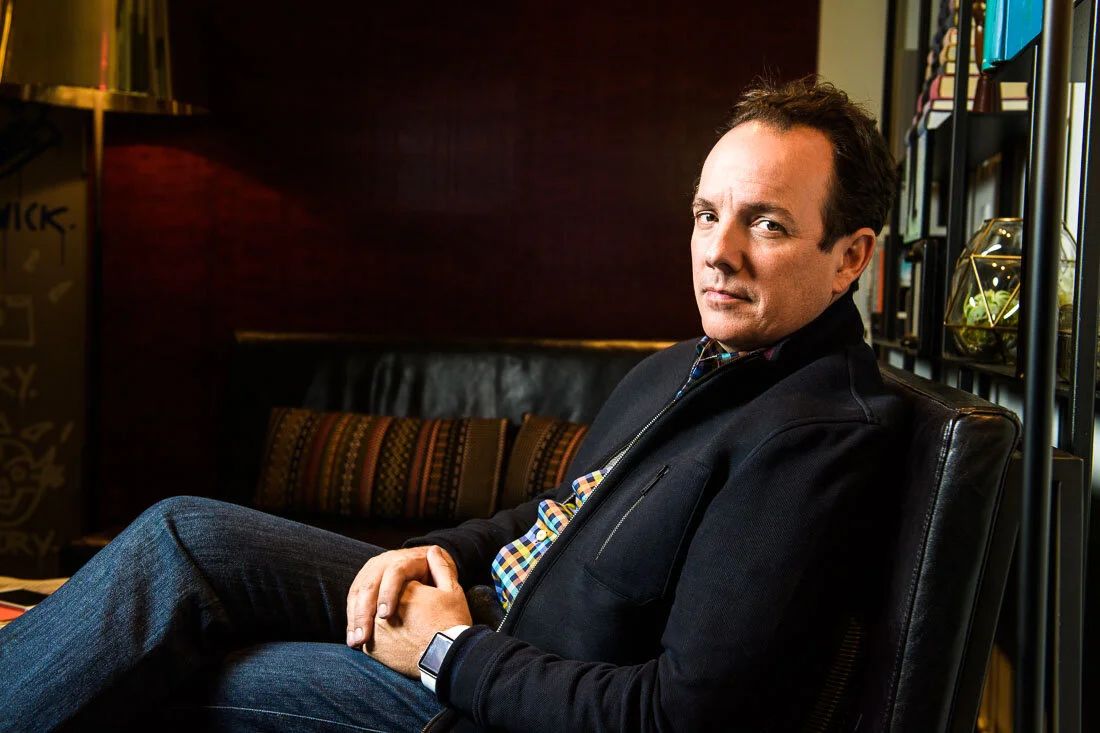
Whether you’re pitching VCs, talking to your team, or trying to appeal to your audience and customers, it’s okay to let people behind the curtain. So why do we often put up a front in our business lives in order to appear professional?

And how do you send a hug over Zoom?

Garyvee has used Lately AI to automatically post engaging video clips on social media.

Garyvee has used Lately AI to automatically post engaging video clips on social media.

Kate Bradley Chernis is Co-Founder and CEO of Lately, a startup backed tech powerhouses including angel investor Jason Calacanis with the LAUNCH Accelerator and Lately user Gary Vaynerchuk’s VaynerMedia. Kate and Emily Binder broke down the front for a refreshing take on being yourself in the business world.

With her XM radio DJ, fiction writing, and marketing agency background, Kate knows good words. She shares tips for the most effective language for your sales and marketing copy and social posts.

More topics include startup advice from two women entrepreneurs and navigating the psychological impacts of pandemic PTSD.

What is Lately AI?

Lately is an AI-powered social media marketing platform that helps marketers scale their publishing and reach. Lately’s artificial intelligence uses your historical social media data to learn what works with your audience and what to post next.

1-click play this podcast anywhere

About Lately and Kately

Marketers can use Lately AI to instantly transform podcasts, videos, and any online news articles or blogs into dozens of social posts that are automatically pre-vetted to resonate with your target audience.

Jason Calacanis interviews Kate Bradley Chernis about her company Lately on This Week in Startups.

Jason Calacanis interviews Kate Bradley Chernis about her company Lately on This Week in Startups.

As a former marketing agency owner, Kate initially created the idea for Lately out of spreadsheets for then-client, Walmart, and got them a 130% ROI, year-over-year for three years.

Prior to founding Lately, Kate served 20 million listeners as Music Director and on-air host at Sirius/XM. She’s also an award-winning radio producer, engineer, and voice talent with 25 years of national broadcast communications, brand-building, sales, and marketing expertise.

TOPICS AND TIMESTAMPS:

02:30: Meet Kate Bradley Chernis and step behind the curtain with Emily

05:05: The kindness of strangers and the "translation of a hug"

08:12: Things that are keeping us sane during quarantine and the stress of the pandemic, and the value of self-care

11:30: How the pandemic is impacting body language, facial expressions, and our ability to connect with customers, friends, and family in a virtual space

Lately is an AI-powered social media marketing platform that helps marketers scale their publishing and reach. It can also transcribe podcasts and cut videos into short clips for social.

Lately is an AI-powered social media marketing platform that helps marketers scale their publishing and reach. It can also transcribe podcasts and cut videos into short clips for social.

12:53: Diving into Kate's background and her experience with XM radio

18:55: There's a lot of VC money floating around there is possibly a hunger to do more and invest more to seek entertainment, excitement, and positive influence. Furthermore, companies naturally present themselves as strong or weak investments based on how they perform under pandemic conditions. 

Kate Bradley Chernis and This Week in Startups Host and Lately Investor, Jason Calacanis with fellow LAUNCH classmates Taylor Monks and Max Coleman

Kate Bradley Chernis and This Week in Startups Host and Lately Investor, Jason Calacanis with fellow LAUNCH classmates Taylor Monks and Max Coleman

"If you're surviving now as a company, you're suddenly very attractive. Because this is the hardest time to survive, so it's clear cut. You don't really have to explain the value of your company if you're making it in a pandemic: it's already there." - Kate Bradley Chernis

Most long-form content like blogs, videos and podcasts takes hours to create, then collect dust. Get exponentially more eyeballs on your hard-earned work by unlocking the value with Lately’s AI.

Most long-form content like blogs, videos and podcasts takes hours to create, then collect dust. Get exponentially more eyeballs on your hard-earned work by unlocking the value with Lately’s AI.

22:00: All about Lately. 

It takes the average human 12 minutes to write a social post. In 1.8 seconds, Lately's AI will give you dozens. Multiply that times the hourly salary of any content creator on your team, and you have mind blowing time and money savings. 

26:25: Showing personality can be difficult when it comes to your brand and social media.

28:00: People spend more time on Facebook's platforms, including Facebook, Instagram, and WhatsApp than any behavior outside of family, work, or sleep. That makes for a lot of data for marketers to comb through. 

"That's the goal, it’s to learn what people care about, right? Because if you don't know what they care about, then it's pointless. And as I learned over the years, what typical marketing tools look at are numbers, and people can't read the numbers or translate them, and this is a constant problem." - Kate Bradley Chernis

33:30: We had to ask, what does Kate, a fiction major, think about the Oxford Comma? 

34:00: Opening the door to your audience and social media trends: what goes viral and what types of posts do Facebook or LinkedIn algorithms favor?


Prior to founding Lately, Kate Bradley Chernis served 20 million listeners as Music Director and on-air host at Sirius/XM on “The Loft”. She’s also an award-winning radio producer, engineer, and voice talent.

Prior to founding Lately, Kate Bradley Chernis served 20 million listeners as Music Director and on-air host at Sirius/XM on “The Loft”. She’s also an award-winning radio producer, engineer, and voice talent.

CONNECT WITH KATE BRADLEY CHERNIS:

Twitter: @LatelyAIKately

CONNECT WITH LATELY:

Instagram: @LatelyAI

Twitter: @LatelyAI

Facebook: @LatelyAI

LinkedIn: LatelyAI

Web: Lately.ai

FOLLOW @BEETLEMOMENT ON INSTAGRAM:

Read More
podcast Emily Binder podcast Emily Binder

070 - John Andrews: Retail Just Advanced Five Years - Marketing Post-COVID

John Andrews, CEO of Photofy, a community content creation platform, and Emily talk about all things Marketing Post-COVID in this week's episode. This episode has it all: social media advertising, the future of retail, and amazon to eCommerce. See what these two think the future holds for marketing and which tactics have been most successful in the last several months.

"What was a slow-burning retail apocalypse for many retailers just turned into a full-fledged firestorm. Shopping will be forever changed post-crisis, and while the dislocation of people and capital will be painful, both will be reallocated to more efficient models." - John Andrews

John and Emily talk about marketing and retail during and post-COVID-19. This episode has it all: social media advertising, the future of shopping, ecommerce, Amazon, and which brands will survive.

Video:

Guest: John Andrews, CEO of Photofy, a community content creation platform, is a media disruptor. Leveraging over twenty years of experience in consumer packaged goods marketing coupled with eight years of social media knowledge to build new media formats in the shopper marketing space. He helped build one of the first ‘people as media’ platforms at Walmart called Elevenmoms, founded Collective Bias (Acquired by Inmar in 2016), and teaches as an adjunct professor at NC State University.

Hear this podcast anywhere:

Topics:

02:30: Curbside is the winner of COVID: How retail has advanced during the pandemic.

04:40: Consumers are drawn to products and services that help them enjoy more “productive time” (e.g. riding in an Uber instead of driving).

06:00: Walmart was ahead of the game with their curbside shopping and pick-up process. They have been doing this for years.

07:00: HEB, a regional grocer in Texas, was beating out larger grocery chains during the peak of the pandemic because larger chains couldn’t keep up with demand and the need for new curbside services. HEB was stated to have begun preparations for curbside pick-up as early as 2005.

A pair of Nike shoes that John, a self-proclaimed sneakerhead, bought off Instagram.

A pair of Nike shoes that John, a self-proclaimed sneakerhead, bought off Instagram.

11:25: Nike is one of the few companies that is managing a transition into digital retail very well, and it’s all about the difference between the use of push marketing and first-party data. 

“Nike is using its direct understanding of its data to perfectly market to me what it knows I am interested in.” - John Andrews 

16:30: Marketing advantage through data and the Nike app

19:35: Two recent global studies from Kantar and Edelman reveal that advertising and social media in particular are at new all-time lows for consumer trust. Just 17% of people trust news from social media.

“Public favorability towards advertising was 25% in December of 2018, but in 1992 that figure was 48%.” -Edelman Trust Barometer

21:00: Media companies are built on advertising, and they have had to be creative about their ad-driven tactics. Instagram does a good job of curating content for unique users but can bombard users with ads based on their interests. 

24:40: What is an email address worth in five years? Will email marketing become a thing of the past? 

30:00: What platforms are the best for targeted marketing? How do sound and voice play into this? 

“There is an advertising opportunity in [the voice assistant’s recommendations] because everything is predictive.” - Emily Binder on the future of advertising

John’s recs: Podcasts, book, & WallStreetBooyah Twitch channel:

  • Book: Ichigo Ichie, the Japanese philosophy of living in the moment and putting randomness into your life: (recommended by Scott Monty)

Ichi-go ichi-e (Japanese, lit. “one time, one meeting”) [it͡ɕi.ɡo it͡ɕi.e] is a Japanese four-character idiom (yojijukugo) that describes a cultural concept of treasuring the unrepeatable nature of a moment. Ichigo Ichie is the idea of living in the here and the now and embracing each day as it could be our last.

John Andrews is CEO of Photofy, a branded content creation platform

John Andrews is CEO of Photofy, a branded content creation platform


download.jpg

Connect with John:

insta - Follow @beetlemoment:

Donate
Read More
podcast Emily Binder podcast Emily Binder

059 - Celebrity Skin for Alexa: Novelty or More?

Amazon is charging users 99 cents to skin the standard parts of its voice experience with a celebrity voice. As we close out this decade, we can see a parallel between these early voice experiences and the beginning years of one of the most successful social media apps of all time: Instagram.

Filters—whether photo filters or voice skins—begin as a bolt-on and a novelty. But imagine where they’re headed.

Think rich, contextual voice experiences.

Hear this podcast in your favorite app:

Similar to what Google Assistant has done, Amazon is now giving customers the option to hear some familiar voices in addition to Alexa’s default voice. Today the company kicked off its celebrity voice program, and it’s starting with Samuel L. Jackson. - The Verge

Enjoy this mini episode! Our regular interview format will resume in January 2020. Find out when:

Want more, but less?

Get bite size news and insights in 1-3 minutes a day on Alexa or your podcast app:

Voice Marketing with Emily Binder

Finalist for Flash Briefing of the Year Award

Read More
podcast Emily Binder podcast Emily Binder

052 - Brian Roemmele - Amazon’s Hardware Announcements: Keys to the Castle - Pt. 1

Echo Buds, Echo Frames, Echo Loop, and more new products take Alexa to new fields: what does it mean? Brian Roemmele is known as the Oracle of Voice for a reason. Over decades he has predicted so many things that came true. The brilliance of these new products like Echo Loop is about getting Amazon into the castle without fighting for spaces that are already occupied, like the wrist or the pocket.

1-click listen anywhere:

About Our Guest:

Brian Roemmele is the recognized world authority on how voice AI will impact computing and commerce. Over arc of his career, Brian has built and run payments and tech businesses, worked in media, including the promotion of top musicians, and explored a variety of other subjects along the way. He has been published in Forbes, Huffington Post, Newsweek, Slate, Business Insider, Daily Mail, Inc, Gizmodo, Medium, and is an exclusive Quora top writer. He hosts Around the Coin (earliest crypto currency podcast), Breaking Banks Radio and more, discussing everything from Bitcoin to Voice Commerce.

Brian created the Multiplex app and Multiplex Magazine, a way to stay on top of everything important in technology, payments and just about anything else. He has taken the stage at Money 20/20, ETA Transact and many private events as a speaker on the future of Voice Commerce.

Companies don’t patent things just because.

A big theme of this episode is getting out of the weeds of the technical features and instead looking at better ways to get work done. Think big picture. We are looking at the beginnings of new use cases in brand new paradigms.

When you paradigm shift, the canvas is blank, and that’s where we are with voice.

This is Part 1 - tune back in next week to hear more! We cover branding and marketing foundations based on personas and archetypes, which will determine success tomorrow. 1-click subscribe free in your favorite podcast app now so you don’t miss it.

The idea of the app is already gone.

amazon-echo-devices-frames-buds-loop-phone.png

From Brian’s Quora article about Amazon’s Fall 2019 release and preview of products (9/25/2019):

If Echo and Alexa devices from Amazon along with the Skills ecosystem were a stand-alone company in 2019, using typical startup multiples, Echo, Inc would be worth about $500 billion dollars. This is an astounding achievement and there shows no sign that the acceleration is slowing.

Amazon Owns The Far-Field Voice First Market, Now They Are Comping For The Near-Field

Today was a next generation Amazon Alexa-themed event with Echo devices for every possible use case but most specially the near-field. I have surfaced ~32 primary Voice First modalities. Amazon is now in three:

1. Near-field - on the body

2. Mid-field - small environment

3. Far-field - open room

read more

Timestamps by topic:

  • 04:00 Amazon’s patents telegraph the future

  • 04:50 Amazon did not dominate in smartphone, obviously (Fire Phone failed - and at the time in 2014, people overlooked the first generation Amazon Echo)

  • 05:50 Smartphone is an old modality

  • 06:10 iPhone is the iconic smartphone

  • 06:30 What is the strategy to get into the castle? Content and shopping, largest merchant on planet

  • 07:10 “Amazon is a retailer, not a technology company” - this is why Amazon created the voice first experience first

Brian Roemmele - @BrianRoemmele

Brian Roemmele - @BrianRoemmele

  • 07:35 Amazon does not pretend to be a tech company, they’re a company that produces technology

  • 07:50 Amazon doesn’t have mindshare yet, and that is key

  • 07:55 What happens with content and mindshare? How does content creation play in?

  • 08:30 Amazon is not going after the smartphone or smart watch (not after the wrist or the pocket

  • 09:10 Products that define new categories must be loved and hated

  • 09:30 “Talk to the hand” back in vernacular with Echo Loop

  • 10:30 Tech companies don’t consider anthropological and sociological impact of products

  • 11:10 We ask “Can we?” too often and don’t ask “Should we?” enough

  • 11:45 Brian’s thesis: Hyper Local

  • 11:55 Echo Loop (a ring) is not always on - it has a button to engage Alexa. It draws you into the Alexa ecosystem without taking away from Apple AirPods - and that is brilliant.

  • 13:20 Future of the voice assistant that you talk to like a significant other

  • 13:30 Done thumb clawing at screen - that is the future

  • 13:50 Echo Frames and Echo Loop are early versions of the ubiquitous voice future

  • 14:20 Near field computing, mid-field, and far-field (open room) - Amazon’s secret weapon over the castle wall was to get in the home (with Echo in 2014) - which became the fastest adopted consumer technology in history

  • 15:10 The tech leap happened organically with consumers from kitchen to living room - Amazon is doing the same strategy again to get people to adopt this in the near field

  • 15:50 People mocked the iPad (menstrual pad?) and look what happened - these products have to be hated or mocked

  • 16:30 iPhone was laughed at because it didn’t have a keyboard. What is past is prologue. We always see the future through the glasses of right now and the past - always view the future through the rearview mirror:

  • 16:40 We defined the new in the words of the old, e.g.: the horseless carriage, flameless candle, talking pictures.

  • 17:50 Most voice first experts have nothing to do with the technology world, which irritates folks in tech

  • 18:45 Computing is not what it was for the last sixty years, and it will not continue to be what is has been the last twenty - think about this for typing and interacting

  • 18:55 Technology gets bigger and bigger until it disappears (e.g. you don’t talk about your carburetor, you just buy a car that works or Jobs saying RAM doesn’t matter, you will only care what the computer does or accomplishes)

  • 21:35 There are no killer applications for voice. “Apps?” That’s 2D. (Check out our interview with Dave Isbitski, Chief Evangelist of Alexa, where we concluded the same thing)

  • 21:55 So what are people really looking for with voice?

  • 22:30 "The idea of the app is already gone.” - Brian

  • 23:40 The intimate relationship that technology can and will spawn is the killer app. We can’t see that world clearly yet

  • 24:50 We’re not battling on the grounds defined by prior technologies

  • 25:10 We’ve only seen 4 of the 175 modalities that voice first works in

  • 25:50 Amazon’s brilliance is great utility to an existing ecosystem (Alexa)

Echo Buds (pre-order Echo Buds for $129.99 <— this link helps support the show!)

Echo Buds (pre-order Echo Buds for $129.99 <— this link helps support the show!)

  • 25:00 Amazon doesn’t expect Echo Buds to replace Apple AirPods

  • 27:20 Echo Buds isolate noise and incorporate multiple VAs like Google and Siri

  • 27:30 AirPods are a cultural phenomenon about fashion as much as sound- that is why they won’t be easily replaced by Echo Buds

  • 28:05 Brand signaling with AirPods, or whatever product comes next- that is human

  • 28:30 Loop and Frames are wise moves

echo-frames-personal-audio.png
  • 29:10 AOL move to open AOL Mail to internet mail is similar to Buds move to open to other VAs

  • 29:40 Amazon subsidies for Buds and Amazon Music. Music is a commodity - supplier does not matter.

  • 30:10 When you stream music, that streaming service makes almost nothing (e.g. Apple, Google, Spotify) - loss leader. The strategy is about attention, narrative, communication with the customer.

  • 30:50 See: Prime. Brilliant. Long term relationship.


OUR SPONSOR

With Trinity Audio, publishers and bloggers can turn their readers into listeners by turning their written content into lifelike speech. All it takes is a short snippet of code to audio-fy your website. Get started for free at trinityaudio.ai.

Connect with Brian Roemmele:

Read More