
"You Don’t Know What You Don’t Know": How Financial Advisors Can Win HNW Prospects
Harvard Business School's Gerald Zaltman reveals that 95% of purchasing decisions are made subconsciously, driven more by emotion than rational thought. Despite this, sales strategies often focus on overwhelming buyers with data, causing decision paralysis.
Our subconscious adeptly processes information using learned experiences, supporting the notion of "trusting your gut." Studies like the Iowa Gambling Task show that emotional intuition identifies patterns faster than rational logic.

For complex sales or considered purchases (such as hiring a wealth manager), appealing to the intuitive mind through storytelling and experiential selling can be more effective than relying solely on facts and figures.
You are advanced enough and honest enough not to be pitching market-beating returns, of course.
But let’s really zero in on the angle that appeals to successful, smart, busy people who know a good deal about investing or have had solid performance but they:
Don’t want to deal with managing a portfolio.
Had a liquidity event or inheritance and find themselves in over their heads.
DIY’d it (perhaps with a robo-advisor) and have 7 figures sitting in Wealthfront or Betterment. (While robo investors can be less desirable FA clients attitude-wise, keep an open mind). This is a legit TAM and a lot of HENRYs hang out there.
Dollar cost averaged into the S&P for fifteen years, and have a chunk of money sitting in Schwab that could benefit from some hygiene, attention, and peace of mind that they’re not overpaying in taxes.
Insights from an actual prospect to RIA client conversion:
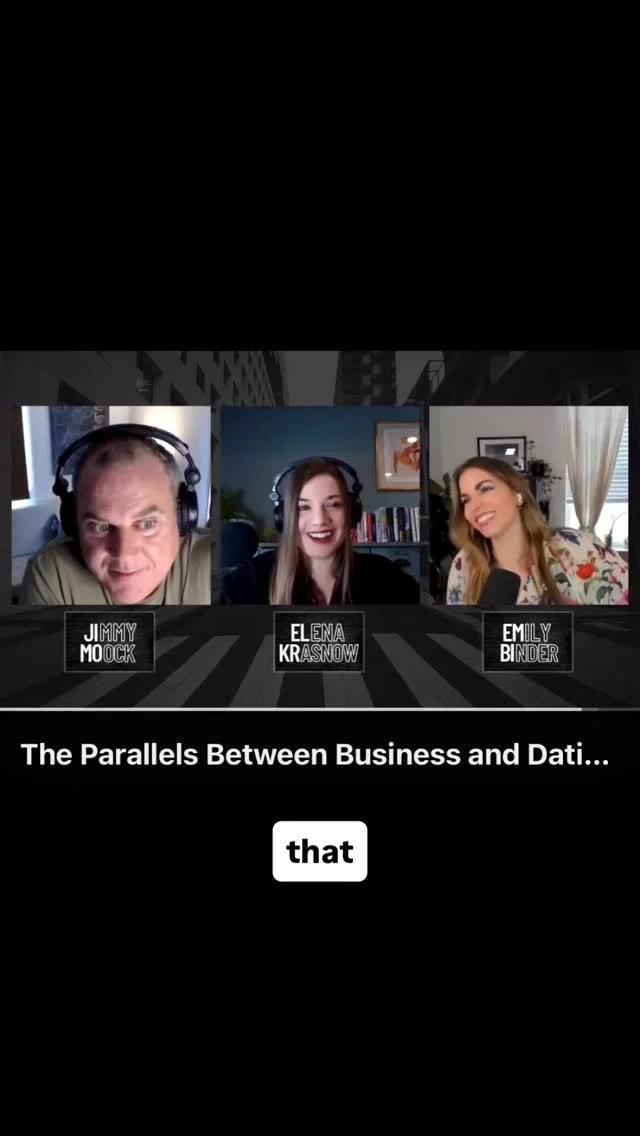
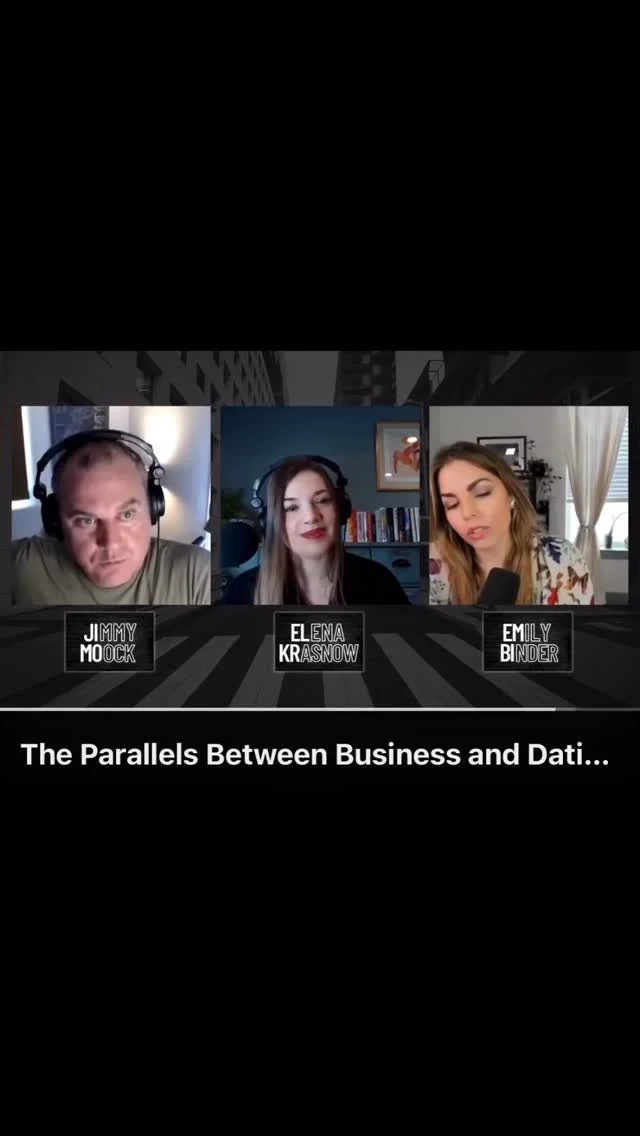
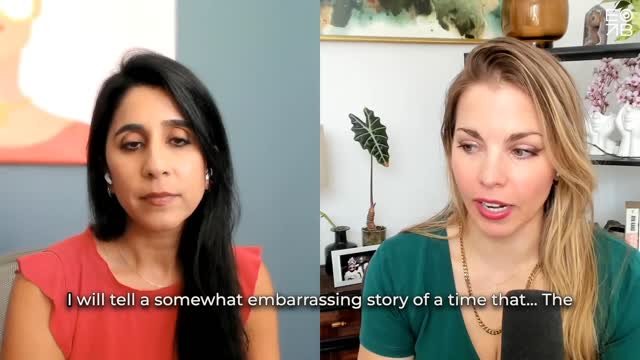
"As a client of an advisor myself, I’m giving you the scoop on why, despite great performance DIY’ing my investments for 15 years, I decided to hire an expert to manage my investments and financial plan.” - Emily Binder
Why I Hired a Financial Advisor
Takeaway: The reduced energy expenditure and peace of mind was worth the fee.
But there’s more nuance to the emotional aspect of this decision.
Positioning your value:
A great messaging strategy speaks to the fact that time (energy) IS money.
It will land well with people who:
value their time (most precious non-renewable resource)
understand the payoff from delegation (business owners especially get this because delegation is a prerequisite for scaling anything)
have intellectual humility and pragmatism about their unpredictable future behavior or lack of detailed knowledge about investing, estate, taxes, retirement, etc.
How do you harness psychology to improve RIA marketing?
Find a way to tactfully show prospects this universal truth:
"You don't know what you don't know."
More on that: The Dunning-Kruger Effect explains how people with limited knowledge often overestimate their expertise. By tactfully addressing this bias, financial advisors can help HNW prospects see the value of delegation and expertise—especially in navigating complex financial decisions they may not even realize they’re unprepared for.
This is an emotional unlock: you are selling peace of mind and time and energy savings. How do you even quantify that? You really can’t. Don’t try. A percentage of AUM is a steal for sleeping well and unemotionally managed diversification.
Sell benefits, not features. Here’s the difference (watch YouTube Short: “Sell benefits, not features.”).
Read more in the blog and video from Emily:
The Time-Freedom Messaging Strategy: 20 Magical Hours
… the greatest benefit you sell but fail to message
Updated August 21, 2025 - from Emily Binder:

Imagine that next month you will receive a bucket of 20 hours in which your mind has zero distractions or worries. You have total quiet and space to dream. Your money is diversified and compounding 24/7, managed by a trusted expert. Your estate is safe. You have enough.
What might you create?
It's not just the 20 hours, it's that your mind is clear and nervous system calm, allowing total blood flow to the frontal lobe. You will come up with new, accretive ideas. Your ideas could create assets, such as a new business or an investment that makes more money from your money while you sleep.
How much would you pay to get those 20 magical hours?
—end pitch—
Your target audience wants those hours. Your service gives them those hours.
Freeing up energy and mental bandwidth is priceless.
~1% AUM becomes perceived as a steal.
Very few wealth managers harness this effectively. It's why you continue having to answer questions about price and fees.
Change the conversation.
I've just given you the general messaging strategy to attract a highly desirable type of client to your advisory business.
We can customize the messaging for your business. Once you have a resonant and distilled message, the hardest part is done. You just platform your message with the right marketing strategy and content. It might simply require a tweak to certain language in your existing content creation.
Click the button below to book a session for Marketing & Brand Strategy (Company).
See testimonials and details about Emily Binder’s advisory sessions at emilybinder.com/call.

2020 Podcast Advertising Stats - Voice Marketing Boosts Purchase Intent
Advertisers on business podcasts enjoy a 14% brand lift for their products and services. Here are the latest stats on podcast advertising and why it's so effective for marketing. Voice marketing reaches your audience on an emotional level, which is where purchase intent lives.
Are advertisers spending more or less as a result of COVID-19?
2020 digital ad spend is expected to increase, while traditional ad spend will fall.
Want to advertise smarter and build affinity for your product or service? Find a podcast that your target audience loves and go all in as a sponsor. Podcast advertising spend is one area of media that is actually expected to increase during and after COVID.
In fact, 52% of U.S. media buyers plan to increase spend in podcast ads during 2020-H2.
(Via Covid Impact on Ad Spend 2020: The Transformation of the Television Marketplace - IAB, 6/16/2020)
What are U.S. Digital and Traditional Ad Spend Plans for the Rest of 2020?
Digital spend is expected to increase. ⬆️
CTV/OTT (connected TV / over the top such as Hulu or CNBC smart TV app): 59% plan to increase spend
Digital video (non CTV/OTT, such as YouTube ads): 56% plan to increase spend
Social media (such as Facebook, Twitter, or LinkedIn ads): 56% plan to increase spend
Podcasts (such as buying dynamic ads through a network like Midroll): 52% plan to increase spend
Traditional spend is expected to decrease. ⬇️
Linear TV: 54% plan to decrease spend
Terrestrial radio: 61% plan to decrease spend
Direct mail: 62% plan to decrease spend
Print: 61% plan to decrease spend
OOH: 51% plan to decrease spend

Brands that advertise their products and services on business podcasts enjoy an average 14% brand lift. Plus, 54% of podcast listeners are either “somewhat” or “much more” likely to consider buying from a podcast sponsor (which vastly outweighs the 7% of listeners who are less likely) according to Edison Research.
How many Americans listen to podcasts?
Over 55% of the U.S. is listening to podcasts. 37% of U.S. adults listen to podcasts monthly (as of 2021).
How many small business owners listen to podcasts?
39% of small and medium-sized businesses owners are podcast listeners.
Hear Emily’s Flash Briefing about this (subscribe free to listen anywhere):
The Brain: Listening, Podcasts, and Decision Making
There is plenty of research on customer behavior proving that podcasts create brand lift. It makes sense because music, sound, and memory are linked to emotion in the brain.
And buying is completely emotional.
Emotion is what really drives the purchasing behaviors, and also, decision making in general.
Studies completed by neuroscientists have found that people whose brains are damaged in the area that generates emotions are incapable of making decisions.
-Harvard Professor Says 95% of Purchasing Decisions Are Subconscious by Logan Chieriotti for Inc.
When marketing a product to a consumer, it's most effective to target the subconscious mind. Read more from Professor Gerald Zaltman in his book How Customers Think: Essential Insights into the Mind of the Market.
The relationships that listeners form with podcast hosts over time engender trust, so ads heard during a podcast are associated with that trustworthy and positive relationship.

“Our brains couple sound with emotional information, storing it as a bundle. Over time, specific sounds elicit pre-conditioned emotions.” -CBC, The Psychology of Sound
STATS: Podcast advertising and purchase intent (updated June 2020)
Brands that advertise products and services during business podcasts have a 14% lift in purchase intent. (We love Pivot, The Compound Show with Downtown Josh Brown, and Masters in Business.)
Brands that have ads in podcasts about society and culture have a 9.2% lift in purchase intent. (We love Death, Sex, and Money.)
Brands that advertise in news and politics podcasts have a 12.8% lift in purchase intent. (We love Robinhood Snacks).
Brands that advertise in comedy podcasts are most likely to have a 7.3% lift. (We love Scam Goddess.)
Brands that advertise in sports podcasts are most likely to have a 9.3% lift. (Not big into sports pods but always open to your recs, tweet us @beetlemoment.)
Take it from Seth Horowitz, an auditory neuroscientist at Brown University:
Sound and the mind are very, very intricately linked, and yet we almost never pay attention to sound. Sound is always there. It's our early warning system. It's also our emotional driver. It's our attentional driver. Everything you hear has some kind of an impact on you and changes how you respond to the rest of the world. So since sound provides context, it's operating in the back and is able to give us the basis for a lot of very, very complex cognitive responses. -Seth Horowitz, Sound A Major Emotional Driver For Humans, NPR
Hear Short Daily Marketing & Tech Bites
Subscribe free to our 1-3 minute daily Flash Briefing on your podcast app or Alexa:
Voice Marketing with Emily Binder. Get it anywhere:
Like the widget above? Want a handy universal podcast app menu and smart link for YOUR show? Get your show’s 1-click podcast menu free from Plink.
Follow @beetlemoment on Instagram:
Stats via Music Oomph, June 2020

Sonic Branding: Facebook and Instagram's Huge Miss
Do you know what Venmo is doing right with sound in their app? Facebook and Instagram have some catching up to do. Press play for this 1-minute Flash Briefing:
On Alexa
Never miss a daily briefing about voice marketing and more!
Subscribe free to Beetle Moment Marketing on Alexa:
Say, “Alexa, Flash Briefing.”
On Google:
Don’t have Alexa? Get Daily Beetle Moment on Google Home (Google Play Music) here.
Transcript:
🔊 SOUND ON 🔊
1
00:00:02.506 --> 00:00:06.806
Facebook has no sound. Instagram has no sound of their brand.
2
00:00:07.126 --> 00:00:08.426
This is a huge miss.
3
00:00:08.766 --> 00:00:14.752
There should be an audio mark that plays when certain things happen or even at least when you open the app. Let's talk
4
00:00:14.803 --> 00:00:17.566
about just Instagram for a second. If you think about Venmo:
5
00:00:18.306 --> 00:00:24.375
There's a cash register cha-ching sound when you receive money. And you actually have a physical reaction to that where you get a
6
00:00:24.425 --> 00:00:28.306
little dopamine rush, you feel good, it's a positive sensation - good association - with
7
00:00:28.626 --> 00:00:29.026
money.
8
00:00:29.766 --> 00:00:30.266
Facebook and Instagram
9
00:00:31.106 --> 00:00:38.070
have a lot of things going on in our body, a lot of reactions in our brain, major hormonal and neurotransmitter shifts
10
00:00:38.131 --> 00:00:44.006
happening as we scroll and like and see comments and get those emotional strokes (ego strokes).
11
00:00:44.686 --> 00:00:48.286
But there's no sound to it. Huge miss.